

Someone recently asked me:
Did Claude replace n8n? Should you drop one and learn the other?
I get why.
For more than a year, when I wrote about building AI agents, I wrote about n8n. Then I started writing about Claude Code, Cowork, and Codex.
But the answer is no.
That is the whole point of this roadmap.
You learn the foundations once. Then one question splits the rest:
Does the agent run on your work, or inside your product?
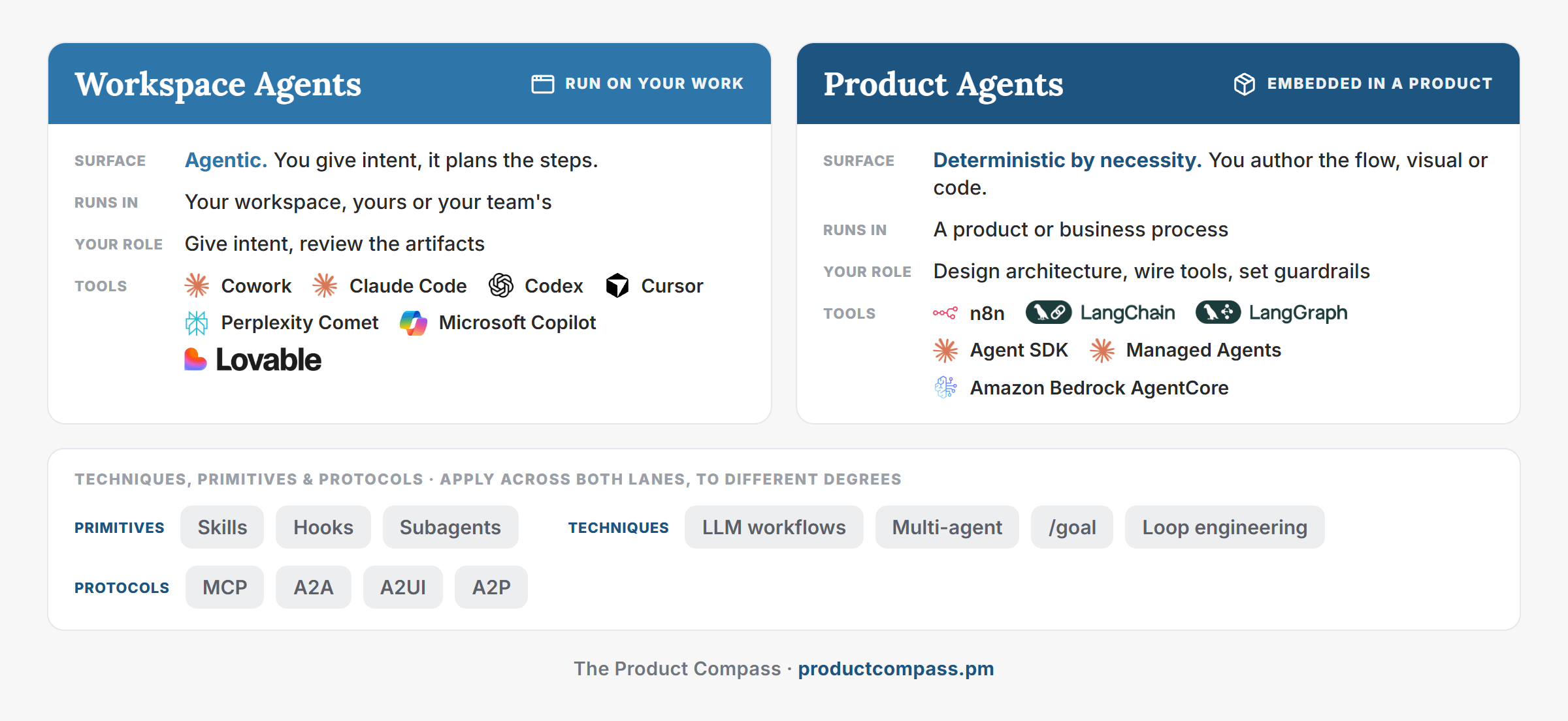
Some agents run in your workspace, on your own work: Claude Code, Cowork, Codex. Others are embedded inside a product or a business process, running on their own for your users or your team: n8n, the Agent SDK, managed platforms.
So it’s not n8n versus Claude Code.
It’s workspace agents and product agents. You need both, and you use the first to build the second.
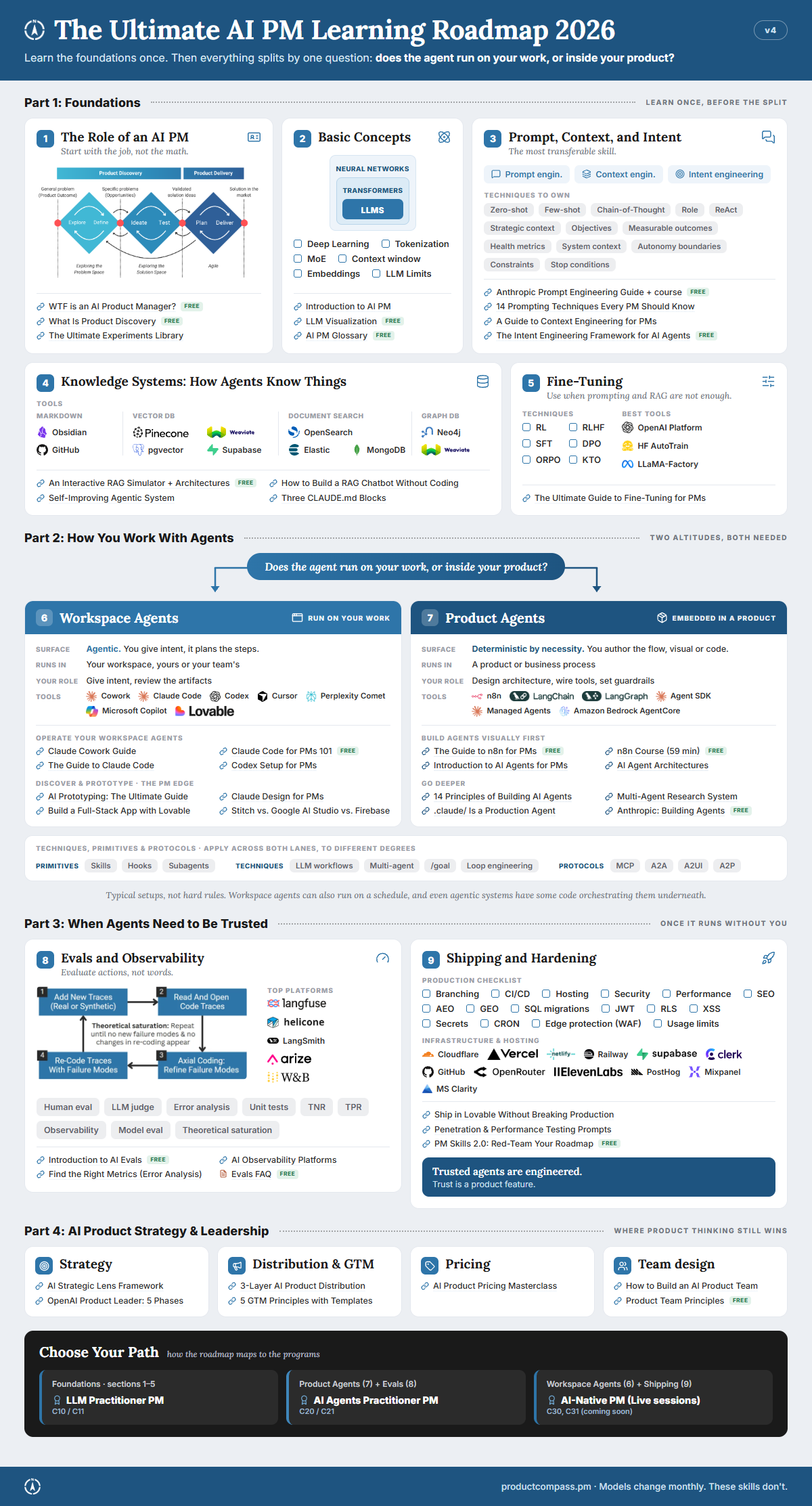
Here is the path:
The foundations every AI PM needs, tool-agnostic, learned once
How you work with agents: the workspace agents you do everything with, and the product agents you build using them
How to make production agents reliable once they run without you
Where AI product strategy fits on top
The exact programs and live sessions that take you deeper on each part
Models change every month. The skills below don’t.
That’s why this roadmap is built around what you actually do, not whichever tool shipped last week.
Part 1. Foundations (Learn Once, Before the Split)
Concepts, communication, and knowledge apply the same way whether the agent runs on your work or inside your product. We learn them once here, and everything after gets easier.
1. The Role of an AI PM
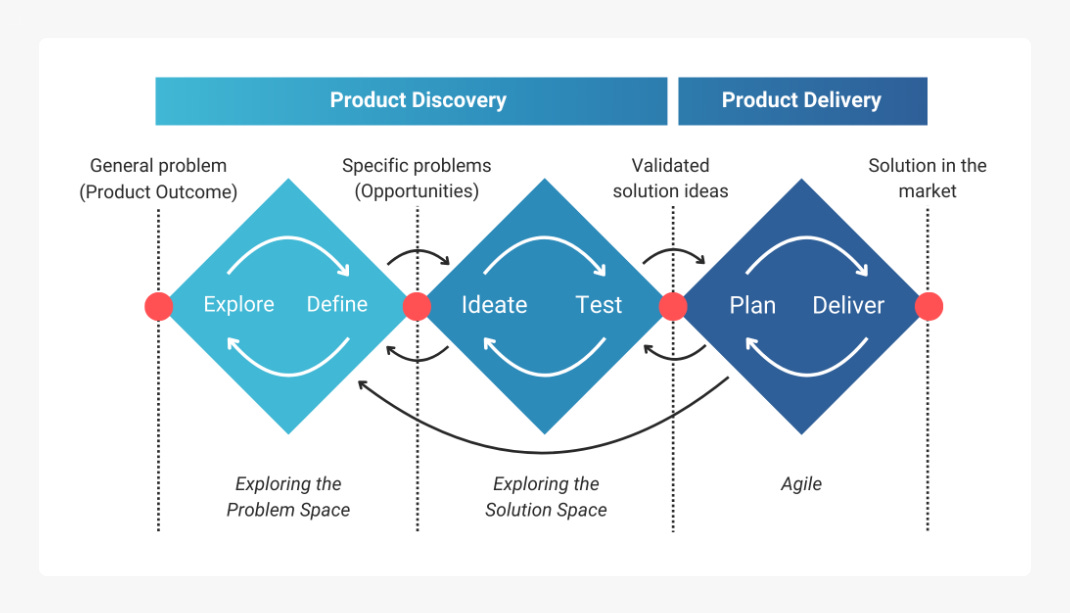
Start with the job. Before any tool or technique, get clear on what the role actually is and where it differs from classic PM. The mindset shift underneath everything: models and tools are easy to get excited about, reliable systems that create value are the actual job.
WTF is an AI Product Manager: the role, and where AI PM differs from PM
What Is Product Discovery: the discovery foundations, still the PM core
Stop Watching AI Models. Start Designing AI Systems: the models-to-systems shift, in full
2. Basic Concepts
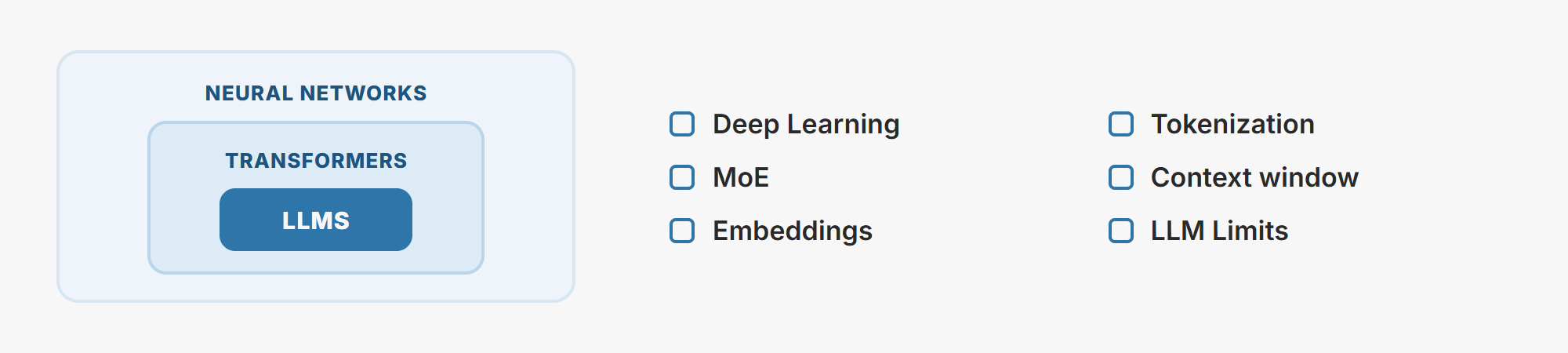
For most PMs it makes no sense to dive deep into statistics, Python, or loss functions. You need to understand what a model can and can’t do, and how to design a system around it.
Recommended resources:
Introduction to AI Product Management: neural networks, transformers, LLMs, tokenization, no math required
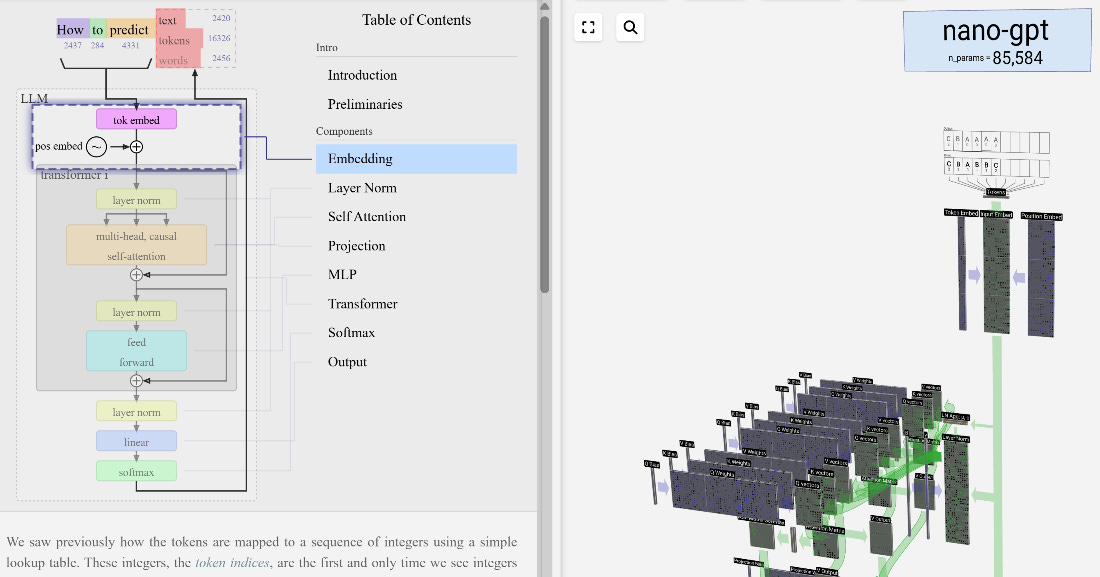
Interactive LLM visualization: watch a model run token by token, in your browser

Source: an interactive LLM visualization AI Product Manager Glossary: 100+ terms (recently updated), save it as a reference
3. Talking to AI: Prompt, Context, and Intent
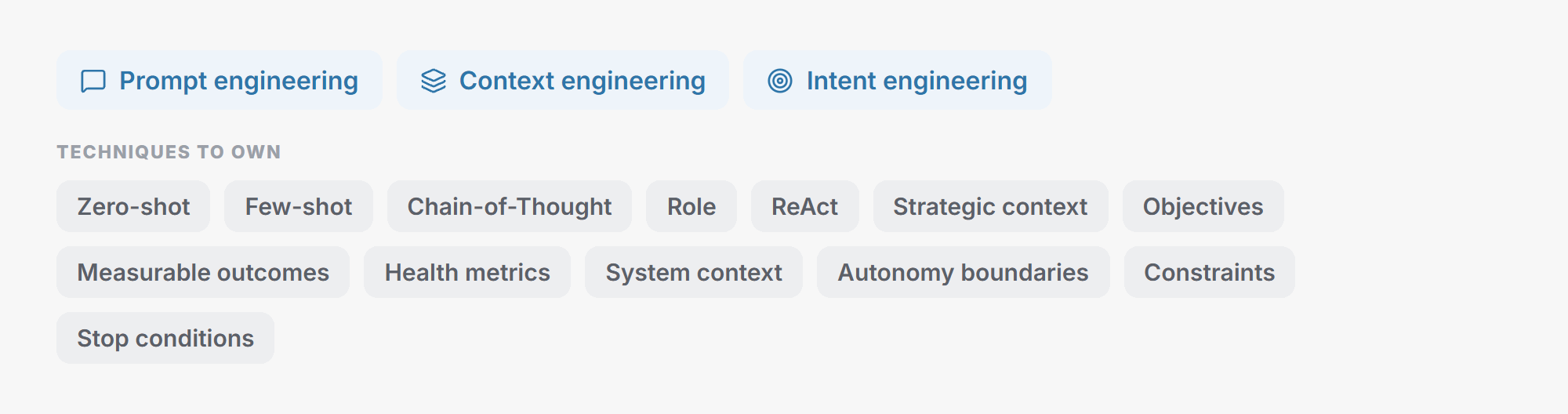
This skill carries over to every agent you’ll touch, workspace or product, so it lives here, above the split. Three layers, each building on the last:
Prompt engineering steers a single answer.
Context engineering gives the agent memory, tools, and the information it needs.
Intent engineering constrains an agent that acts autonomously, even long-term, so it does the right thing without you watching every step.
Learn all three and you can talk to any agent, workspace or product.
Recommended resources:
A Guide to Context Engineering for PMs: the new prompt engineering, covering RAG, memory, tools, and retrieval
The Intent Engineering Framework for AI Agents: objectives, outcomes, enforced constraints
Prompt resources: The Ultimate Prompts Library for PMs, Anthropic’s Prompt Engineering guide and its free interactive course, plus the Prompt Generator and Prompt Library
4. Knowledge Systems: How Agents Know Things
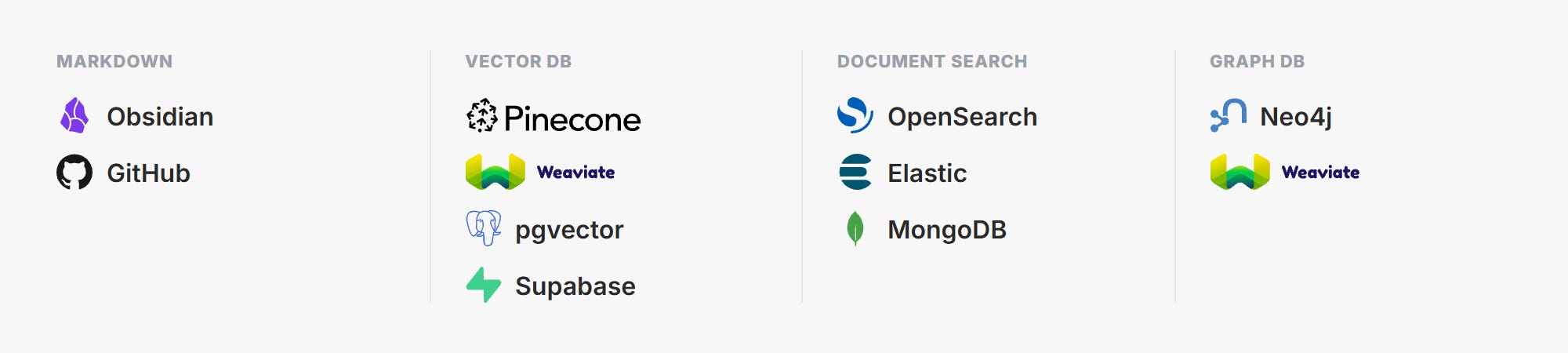
Look closely at knowledge systems and the split almost disappears. A markdown second brain that Claude Code reads before it answers, and a vector database that a production agent searches, are the same idea wearing two outfits: how an agent knows what it needs to know.
Your agent is only as good as the context system it can retrieve from and update. Second brains, CLAUDE.md, RAG, vector stores, files, and past tool outputs all answer that one question.
Recommended resources:
An Interactive RAG Simulator: watch retrieval work, chunk by chunk (free)
How to Build a RAG Chatbot Without Coding: vector stores, embeddings, chunking, step by step
What I Learned Building a Self-Improving Agentic System: systems that compound, and how they degrade
Gemini File Search API: A Practical Handbook: RAG as a service
For PMs: Learn markdown and vectors first. Reach for graphs only when your relationships get genuinely complex.
5. Fine-Tuning

Fine-tuning is not where most PMs should start. It's what you reach for when prompting and retrieval stop being enough, and the skill is knowing when that moment arrives. Most days, RAG wins.
Recommended resources:
The Ultimate Guide to Fine-Tuning for PMs: when to fine-tune vs stick with RAG, plus SFT, DPO, and ORPO
Practice platforms (no coding):
Part 2. How You Work With Agents
Foundations done. Next:
Workspace agents are how you do the work, all of it: discovery, prototyping, delivery, shipping, research, marketing.
Product agents are what you build with them, when the agent has to live inside a product.
You use one to make the other, so they were never rivals. Learn both, starting with your workspace agents.
6. Workspace Agents: Run on Your Work
A workspace agent runs on your own work. You give it intent and review what it produces, whether you watch it live or let it run on a schedule overnight. It's agentic: you set the goal, the agent plans and runs the steps. You use them across the whole job, from discovery to prototyping to delivery to shipping. This is the bench everything else runs on, so it goes first.
Start with the tool, then learn to operate it well: how to organize it with CLAUDE.md / AGENTS.md, skills, MCP servers, hooks, and subagents.
Recommended resources:
Claude Cowork: The Ultimate Guide for PMs: no terminal required
Claude Code for PMs: The Beginner’s Guide: install, MCP, skills, start here
The Guide to Claude Code for PMs: more advanced
Claude Dynamic Workflows for PMs: set a goal tonight, results by morning
The advanced move: agentic engineering. Once you can manage one agent, you can build real things with it. Recommended resources:
The Rise of Vibe Engineering: the basic engineering skills you now need
What a workspace agent gets you: AI product discovery and prototyping
This is the payoff of your workspace agents, and the work that sits closest to what a PM already does. Product sense plus the ability to build: that's the combination you bring here. You use workspace agents to discover and prototype in hours instead of weeks: test a hypothesis, build a working prototype, put it in front of users, learn, repeat.
Recommended resources:
From Weeks to Hours: How Claude Design Compresses Product Discovery
Other tools to prototype with: Lovable full-stack course, Base44, Dyad (free), Stitch vs Google AI Studio vs Firebase
Dedicated AI discovery and prototyping guides 2026 are coming. Until then, the discovery fundamentals still hold, and AI changes the speed, not the logic: The Ultimate Validation Experiments Library, Continuous Product Discovery 101, 12 Proven Sources of Insights, Jobs-to-be-Done Masterclass with Tony Ulwick, How to Prioritize Ideas as a Product Manager
7. Product Agents: Embedded in a Product
A product agent is embedded inside a product or a business process. You design the architecture, wire the tools, set the guardrails, and it runs on its own, for your users or your team. You build it with your workspace agents, which is why it comes second here, not because it matters less.
Product agents are orchestration-first: you design the steps, tools, guardrails, and handoffs instead of letting the model improvise the whole process. The question you’re probably asking: why learn n8n, if Claude and the Agents API can build agents too?
Because building them visually first teaches you more. In n8n, you can see how the agent works. You drag the boxes, connect the tools, and watch the data move, the same way you’d build RAG by hand. You feel where the loop lives, where the model decides, where a tool result comes back.
That understanding compounds. It’s why I was writing about orchestration over autonomy months before “harness” caught on, and why the intent engineering framework was here before the labs shipped their /goal commands.
Build a few agents visually before you build them in code. You'll understand the harness in a way that's hard to get if you start in Claude Code, and that understanding carries back into Claude Code too.
My favorite tool for this, by far, is n8n: drag-and-drop workflows and multi-agent systems that connect to almost anything.
Recommended resources:
The Guide to n8n for PMs: the leading no-code framework
Introduction to AI Agents for PMs: what an agent is, building blocks, workflows vs agents vs multi-agent
AI Agent Architectures: The Ultimate Guide With n8n Examples
MCP for PMs: Automate Figma to Jira in 10 Minutes and J.A.R.V.I.S.: n8n + Any MCP Server
Your .claude/ Folder Is a Production Agent: the Agent SDK, reframed
Part 3. When Agents Need to Be Trusted
Once an agent touches real work or real users, one question matters: can you trust it?
Evals are mostly a production concern. When you manage a workspace agent, you review its work as it goes, the artifact review from Part 2. When an agent runs without you watching and can impact your customer, you can't eyeball quality, so you have to measure it. Shipping and hardening cover the apps you build along the way.
8. AI Evals and Observability
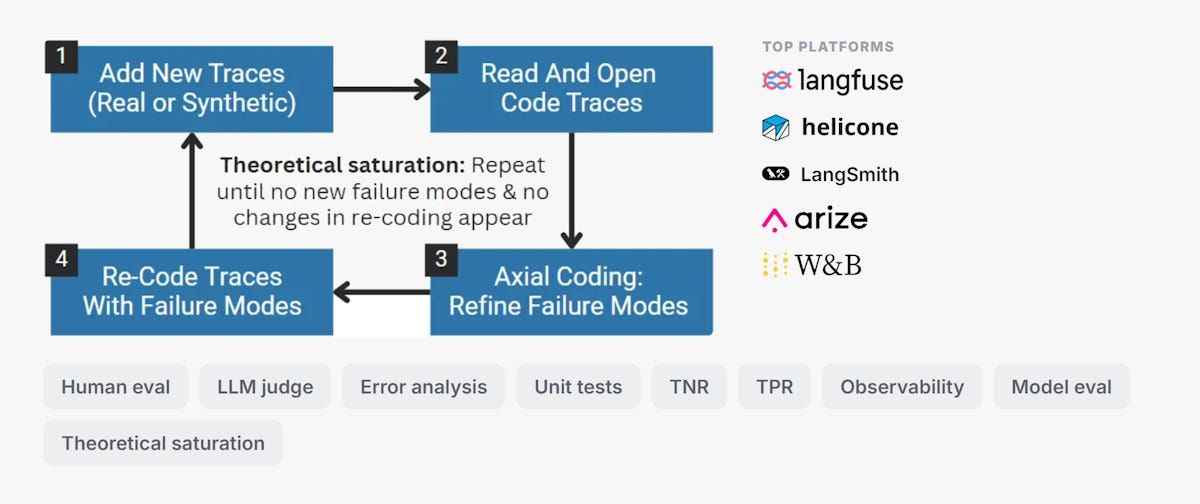
Fancy architecture doesn't matter if the product doesn't work, especially once it runs on its own. Evals are where trust is won or lost, and they're your job, not only the engineers'.
Recommended resources:
Introduction to AI Evals: A Complete Guide for PMs: start here (free)
The action-based framework: evaluate actions, not words
The Ultimate Guide to AI Observability and Evaluation Platforms
A massive free FAQ: hamel.dev/blog/posts/evals-faq
9. AI Shipping and Hardening
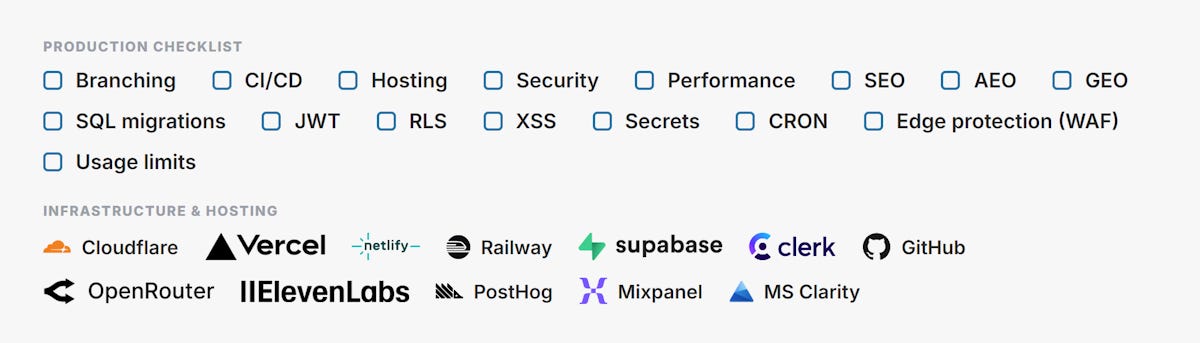
When something you built with a workspace agent becomes a product people rely on, the question shifts from "what can I do?" to "how do I not break production?" Branching, hosting, CI/CD, security, and performance.
Recommended resources:
How to Build and Scale Full-Stack Apps in Lovable Without Breaking Production: branching to separate dev, test, and prod
17 Penetration and Performance Testing Prompts for Vibe Coders
PM Skills 2.0: Red-Team Your Roadmap, Then Check the Code Before You Ship
Part 4. Zoom Out: AI Product Strategy and Leadership
Tools and agents are the how. This is the why, where product thinking still beats any model. Don’t skip it. The PM job is expanding into shipping and business outcomes, not just solving problems for users.
Recommended resources:
How to Create an AI Product Strategy: The AI Strategic Lens Framework
OpenAI’s Product Leader: 5 Phases to Build, Deploy, and Scale AI Strategy
3-Layer AI Product Distribution Framework: features get cloned, models commoditize, distribution compounds
5 GTM Principles With Frameworks and Templates: the go-to-market layer, with playbooks you can reuse
The AI Product Pricing Masterclass: Why SaaS Pricing Fails in AI
Product Model First Principles: Team: how the strongest product teams are structured, from Marty Cagan’s first principles (free)
A Proven AI PRD Template by Miqdad Jaffer (OpenAI): the artifact that turns product strategy into a build spec
Choose Your Path
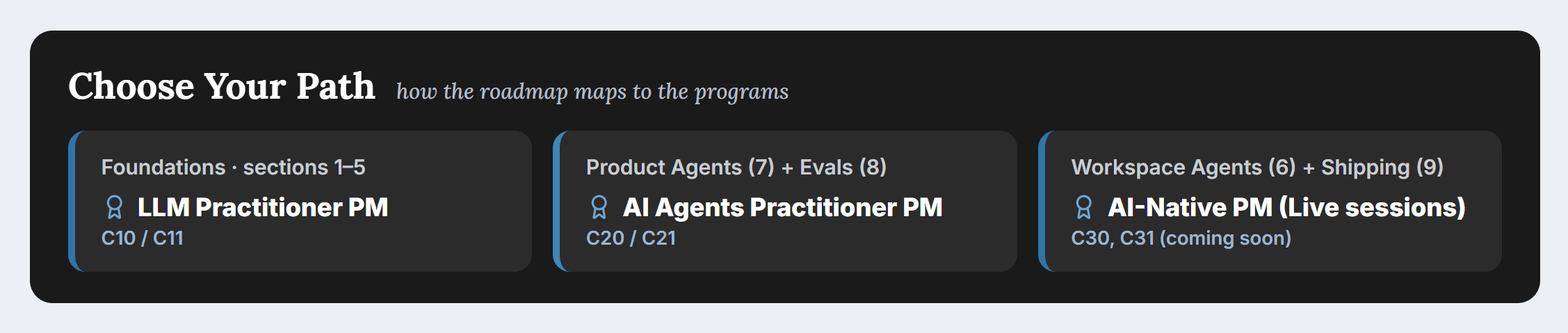
The roadmap above is free. If you want the structured version, with lessons, projects, certification, and support, here’s how the parts map to the programs.
I. The AI PM Learning Program. Included for paid subscribers, async and hands-on, with a dedicated Slack and weekly office hours:
C11. LLM Practitioner Certified PM: the foundations, built by doing
C21. AI Agents Practitioner PM: build and deploy production agents
II. The AI-Native PM Roadmap. Live, hands-on session every week + recordings. The first three are free, from Claude Cowork to Claude Code in VS Code. This teaches your workspace agents, live.
C31. AI-Native PM (coming soon)
📌 The highest-leverage move for a PM right now is workspace agents and Claude Code (§6), which is what I’ve been writing about so much in recent months.
Next comes shipping with AI - from strategy and discovery to agentic engineering to GTM, monetization, and beyond.
Thanks for Reading The Product Compass
It’s amazing to learn and grow together.
Start building. Stop theorizing.
Have a fantastic Sunday and a great week ahead,
Paweł
P.S. If you want to learn workspace agents live, the first three AI-Native PM sessions are free.
This is epic! But the problem is I find you put so much into your content it's hard to absorb it. I feel overwhelmed.
Very timely!