

A special, AI PM glossary (requires a free subscription). Print it and hang it on the wall.
Last updated on 8/9/2026.
Contents:
1. AI Product Management
Agentic Engineering (aka. Vibe Engineering)
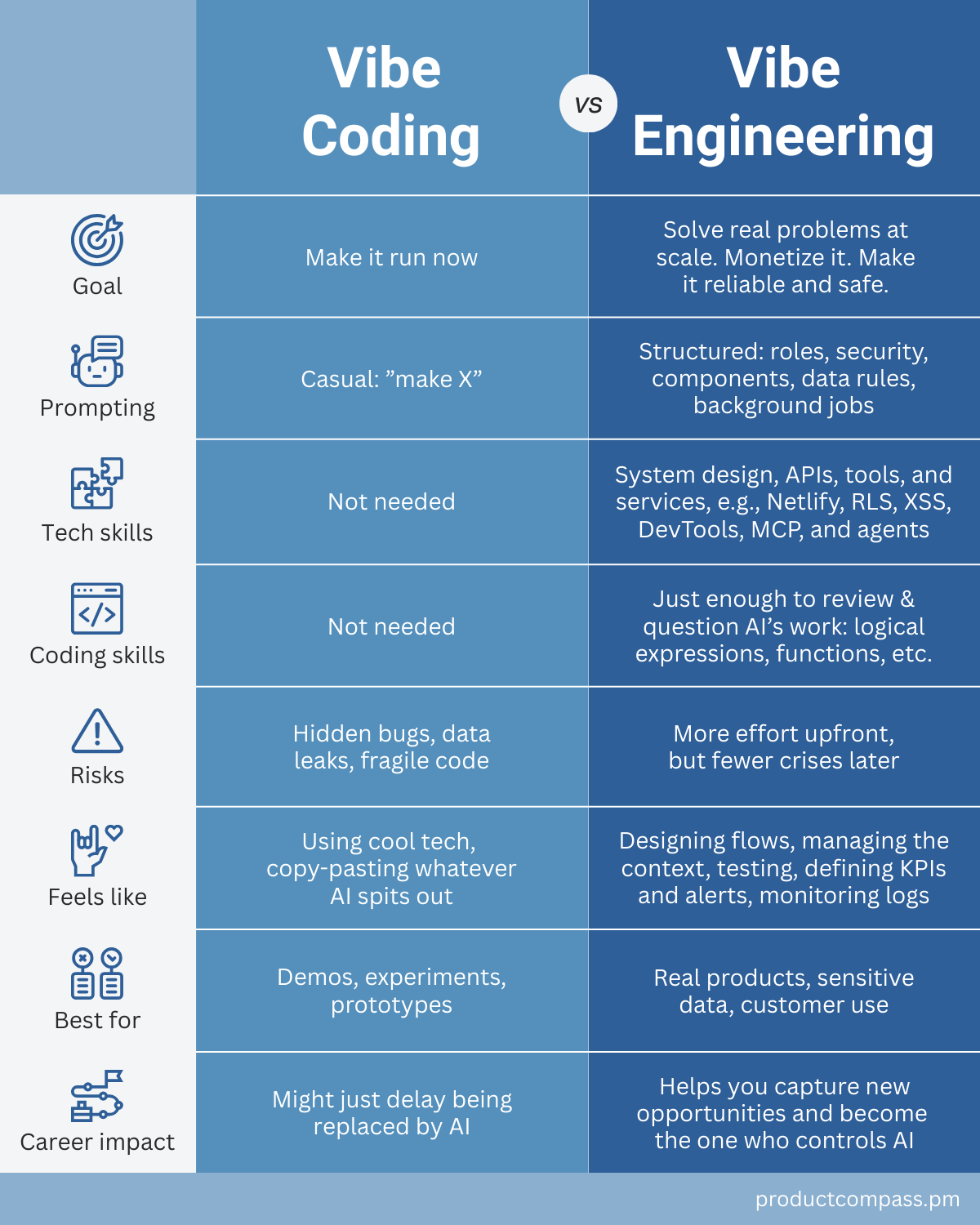
Building software with AI agents using real engineering discipline: clear specs, version control, tests, evals, artifact review, security checks, and production standards. It keeps the speed of AI-assisted building while adding the constraints needed to make the result scalable, secure, and maintainable.
The term was popularized by Andrej Karpathy in 2026. The same shift from vibe coding to engineering discipline was explored in Sep 2025 in The Product Compass newsletter:
AI Literacy & AI Intuition
The ability to understand foundational AI concepts (e.g., LLMs, AI Agents, MCP), perform error analysis, and iteratively refine prompts or models based on hands-on experimentation. I recommend developing it by working with AI, not studying theory.
AI Product Manager
A PM who works on AI-powered products and features. Unlike traditional PMs, AI PMs must understand the technology and develop an AI intuition.
AI-Powered Product Manager (aka AI-Native PM)
A PM who uses AI as part of their day-to-day work: research, synthesis, discovery, prototyping, writing, analysis, and delivery. The distinction is about how the PM works, not necessarily what product they manage.
Paweł’s note: soon, this may stop being a separate category. AI will likely become part of the default PM toolkit.
Product Manager
The team member especially responsible for the two risk areas:
Customer value: Do customers want this product or feature? Can we actually deliver on the value promised?
Business viability: Will it work for different parts of the business?
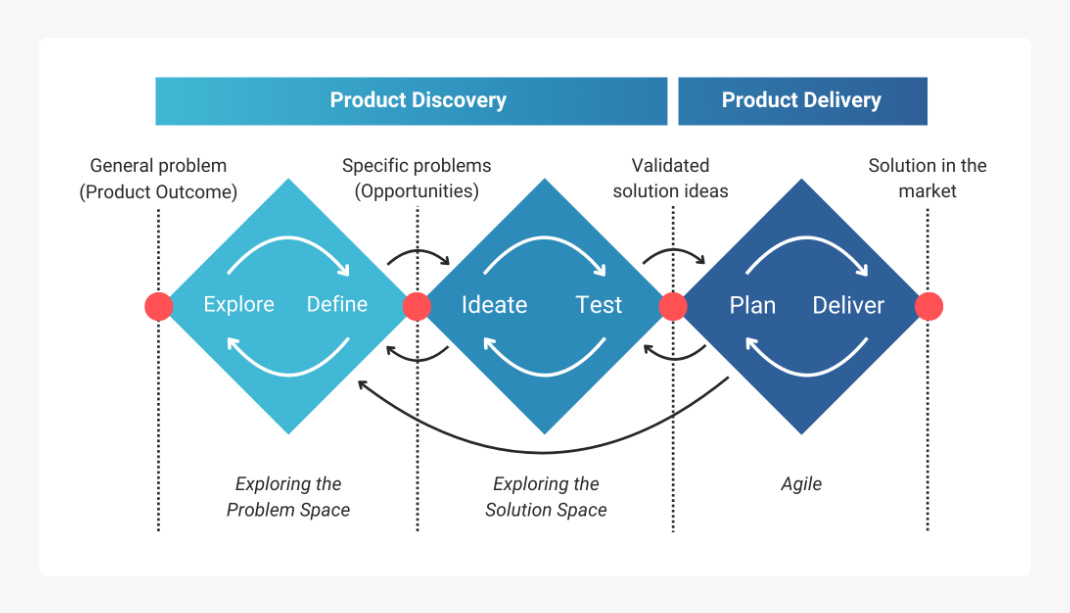
The most important activity for a PM is participating in Product Discovery. Its goal is to address key risks before implementation, to avoid wasting time and resources.

Spec-Driven Development
Writing a clear specification of what should be built and using it as the source of truth that an agent (and its loops and tests) work toward.
Opinion: It never worked for humans. Waterfall lost to agile because you discover what you actually need while building, not in a spec written up front. Thariq's field guide is the clearest proof it's the same for agents: the unknowns surface during the work and after it.
The fix isn't hunting down every unknown unknown either. It's communicating the context beyond the goal, the why and the strategy and the constraints, so the agent navigates the unknowns you never listed.
I've been calling this intent engineering since January 2026.
Vibe Coding
Building software by describing what you want to an AI and accepting what it produces, with little attention to how the code works. It is fast and great for prototypes, but it skips the engineering needed to make something you can scale, secure, and maintain.
Also see ‘Agentic Engineering.’
Recommended reading for this section: