

Hey, Paweł here. I’ve been sick, so please expect the next standard post on Sunday. Today, I have a few interesting findings to share.
Let’s dive in.
1. My Benchmark: GPT-6.1 Sol, Sonnet 5.5, and Opus 5.5
First off, new models. Just recently Opus 5.5, Sonnet 5.5, and GPT-6.1 Sol dropped.
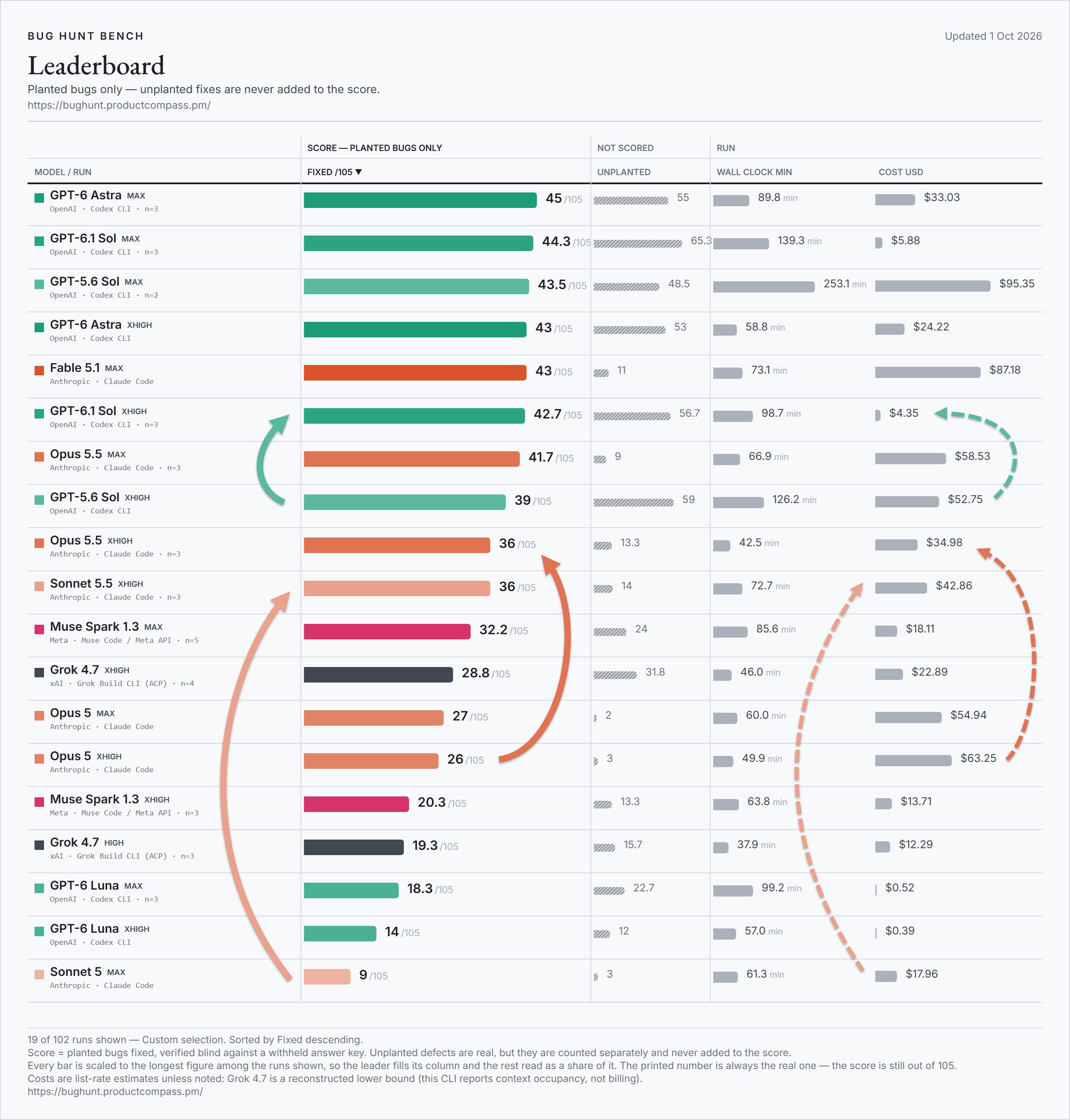
I don’t trust the benchmarks, so I tested those models on real work: 2 repos, 105 bugs frontier models missed at the beginning of 2026, find and fix what you can.
The results:
What drew my attention:
Opus 5.5 is significantly stronger than Opus 5 and nearly matches Fable 5.1 (41.7 vs 43) at two-thirds of the cost ($58.53 vs $87.18). I recommend you stop using Fable 5.1 unless you have an unlimited budget.
Sonnet 5.5 is 2x cheaper than Opus 5.5 on input and output tokens ($2/$10 vs $4/$20 per MTok). But in long agentic sessions, most of your costs are cache reads, and those are priced identically: $0.20/MTok.
GPT-6.1 Sol is slightly stronger while being over 10x cheaper than GPT-5.6 Sol on complex tasks.
GPT-6.1 Sol’s input and output tokens cost half as much
Its cache reads are 4x cheaper (framed as a 95% discount by OpenAI). This may be temporary. Soon, we may get back to the standard “90% discount.”
The 10x difference is best explained by the number of turns (485 for GPT-5.6 Sol xhigh vs 200 for GPT-6.1 xhigh on the same task).
On the release day (yesterday), GPT-6.1 Sol was almost 2x slower than Opus 5.5. According to Tibo from OpenAI, it should become almost 2x faster than yesterday over the next hours.
Sonnet 5.5 (max) surprise
Sonnet 5.5 (max) won the benchmark with 51.3/105 by running 1,497 turns over 287 min compared to 270 turns over 90 min of GPT-6 Astra. It’s not smarter, just more motivated and able to think for longer.
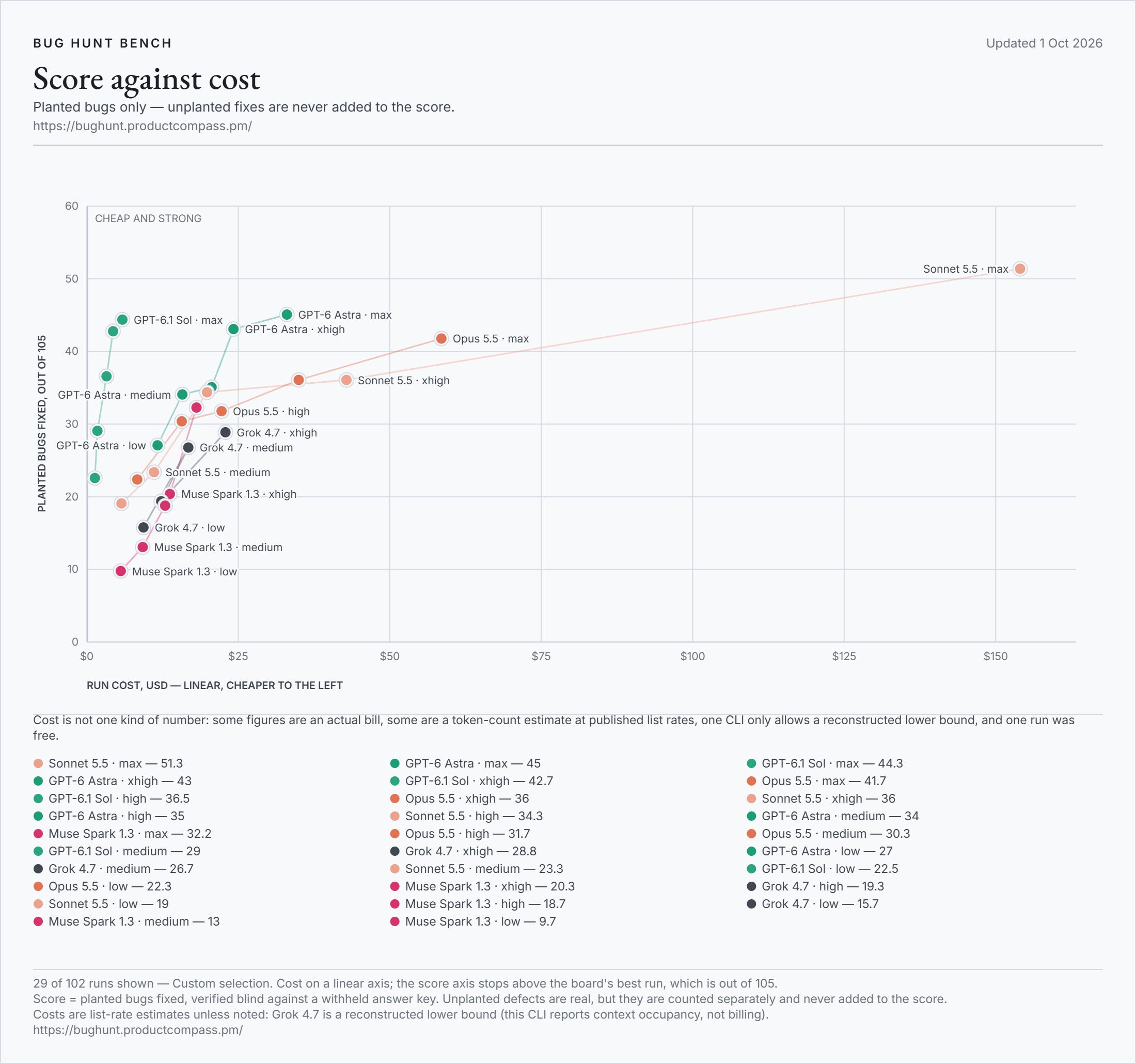
I’m not emphasizing this score, as it was too slow and too expensive to use even in agentic coding. You won’t see those gains in your standard tasks.
2. The Real Cost of The AI Subscription
We’ve all been hearing that subscriptions are cheaper than APIs, but I’d never seen the exact number.
So yesterday, I took several popular plans and burned a slice of their weekly allowance on purpose. I logged every model call and priced those calls at the vendor’s public API list price.
The results with the Bug Hunt Benchmark as a cost per run reference:
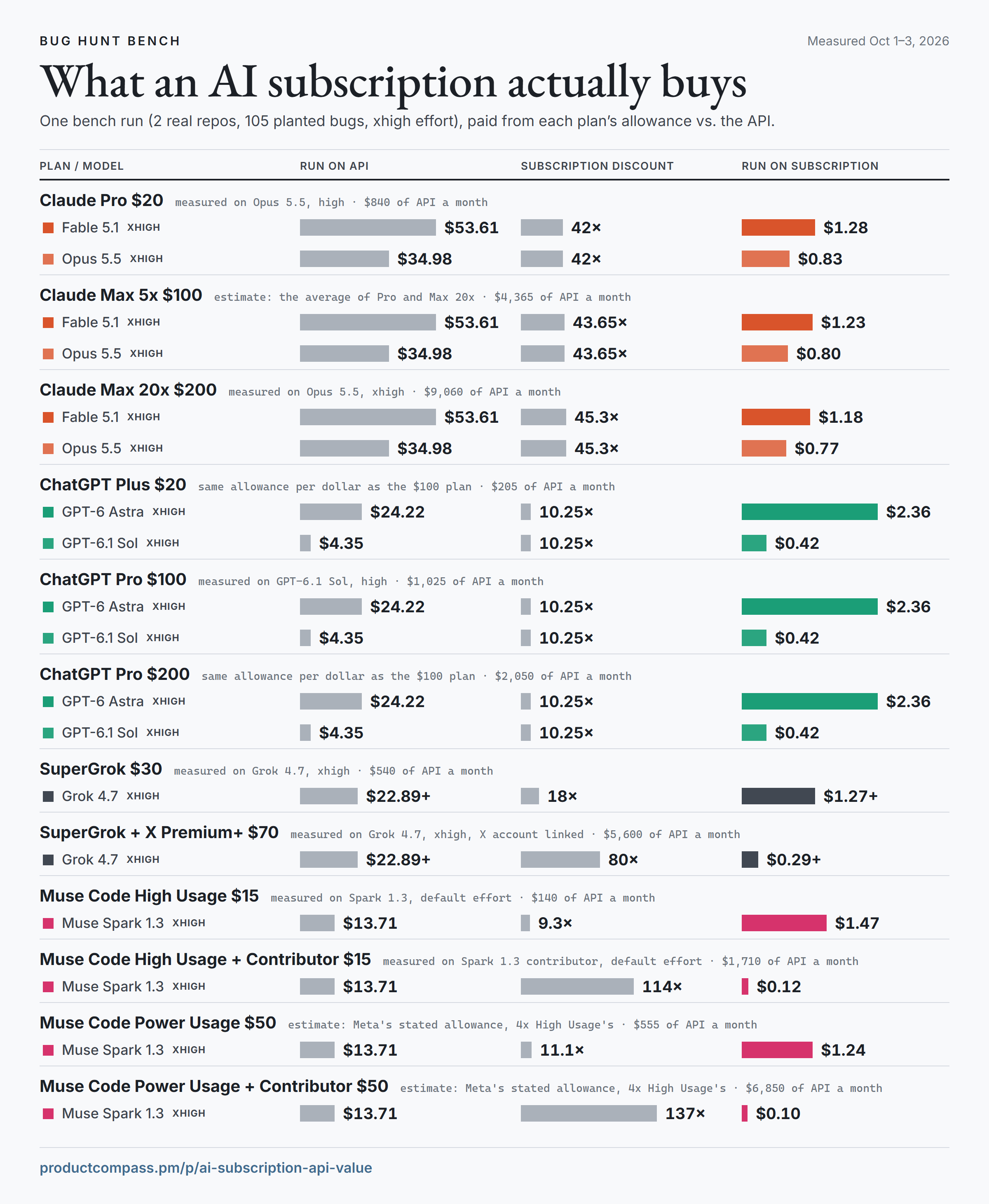
Discount = how much API usage a month of the plan buys, as a multiple of its price. Not in the chart: SuperGrok Lite (15.7x). Both Muse Code Power Usage rows are derived from Meta's stated allowances, not measured.
While I couldn't test all subscription levels, according to OpenAI their monthly allowance is now directly proportional to the subscription price:
Plus ($20/mo) = the reference OpenAI monthly allowance
Pro 100 ($100/mo) = 5x monthly allowance - tested, 10.25x more usage than the API
Pro 200 ($200/mo) = 10x monthly allowance (just downgraded from 20x)
For Claude:
Pro ($20/mo) = the cheapest plan - tested, 42.0x more usage than the API
Max 5x ($100/mo) = we don’t know the exact relationship to Pro, 5x applies to the 5-hour window - in the chart, an estimate: the average of Pro and Max 20x
Max 20x ($200/mo) = we don’t know the exact relationship to Pro, 20x applies to the 5-hour window - tested, 45.3x more usage than the API
Note: I’ve removed the Anthropic Max 5x row after being corrected on X. The 42.0x is Claude Pro, which I measured afterwards on a fresh account. Max 5x is in the chart as an estimate until I measure it.
According to Meta, for Muse Code:
Everyday Usage ($5/mo) = the reference Muse monthly allowance
High Usage ($15/mo) = 5x monthly allowance (not 3x) - tested, 9.3x more usage than the API
Power Usage ($50/mo) = 20x monthly allowance
Benchmarks re-calculated with subscription prices
I re-calculated the cost of the Artificial Analysis benchmark (a popular one) using the subscription prices. Turns out GPT-6 Astra lags far behind Opus 5.5:
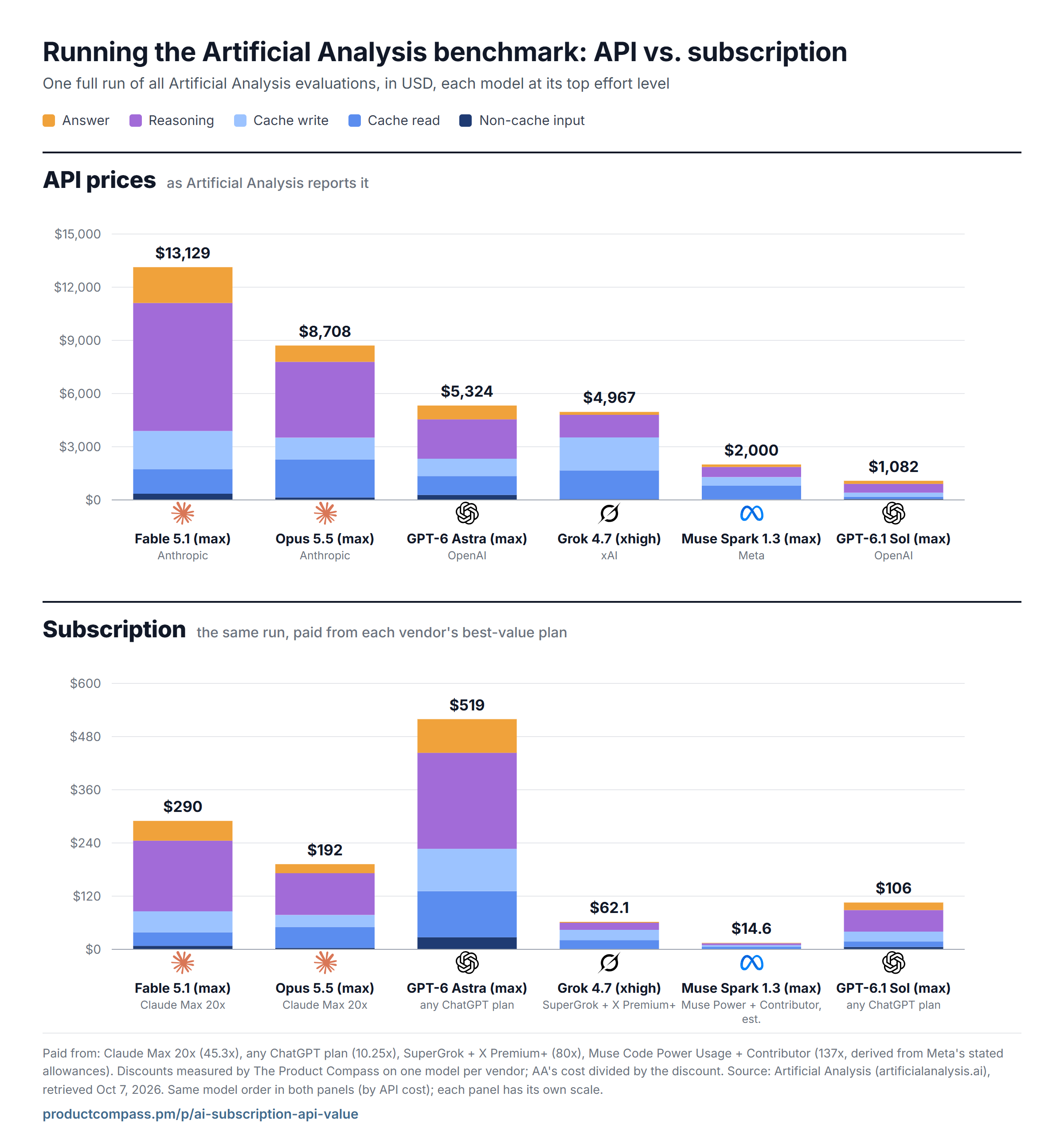
Across multiple effort levels and scores, it becomes even more clear that Opus 5.5 is now the best value for the money:
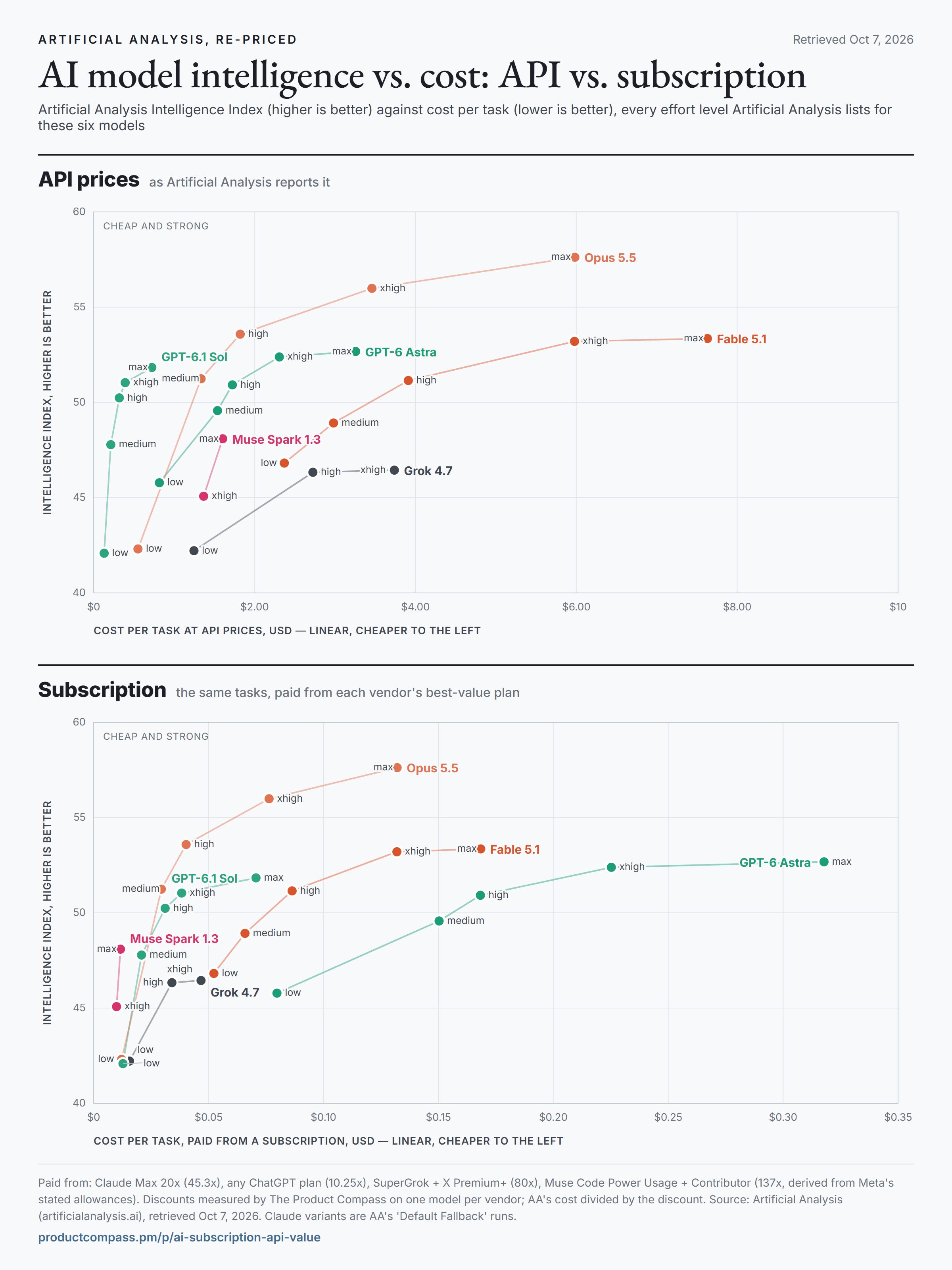
I got different scores in my Bug Hunt Benchmark. It’s more narrow and measures the models’ ability to find and fix hard bugs in real repos. Here, GPT-6.1 Sol recovers, while Muse + Contributor is still the cheapest, strong enough model for most tasks:
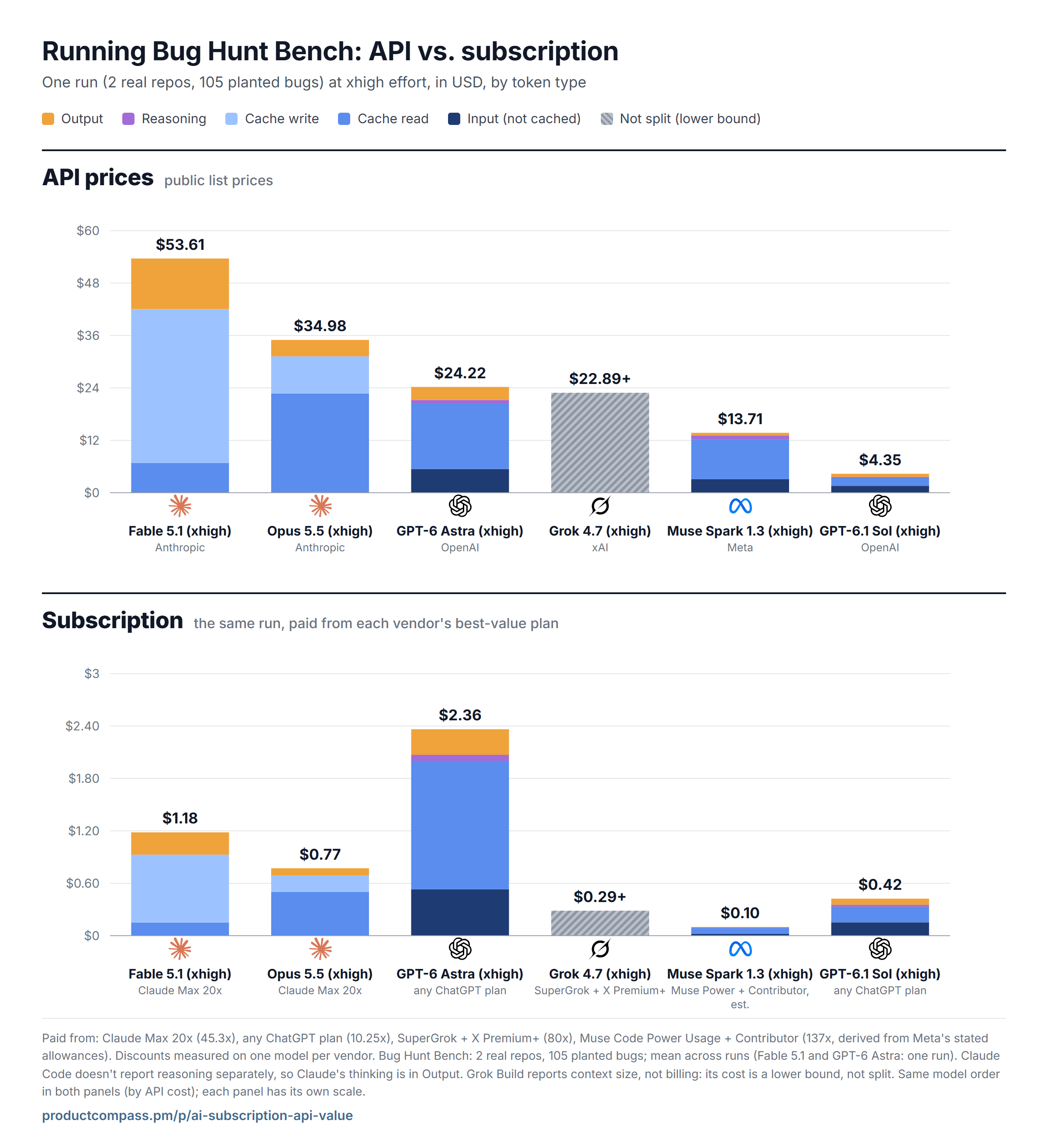
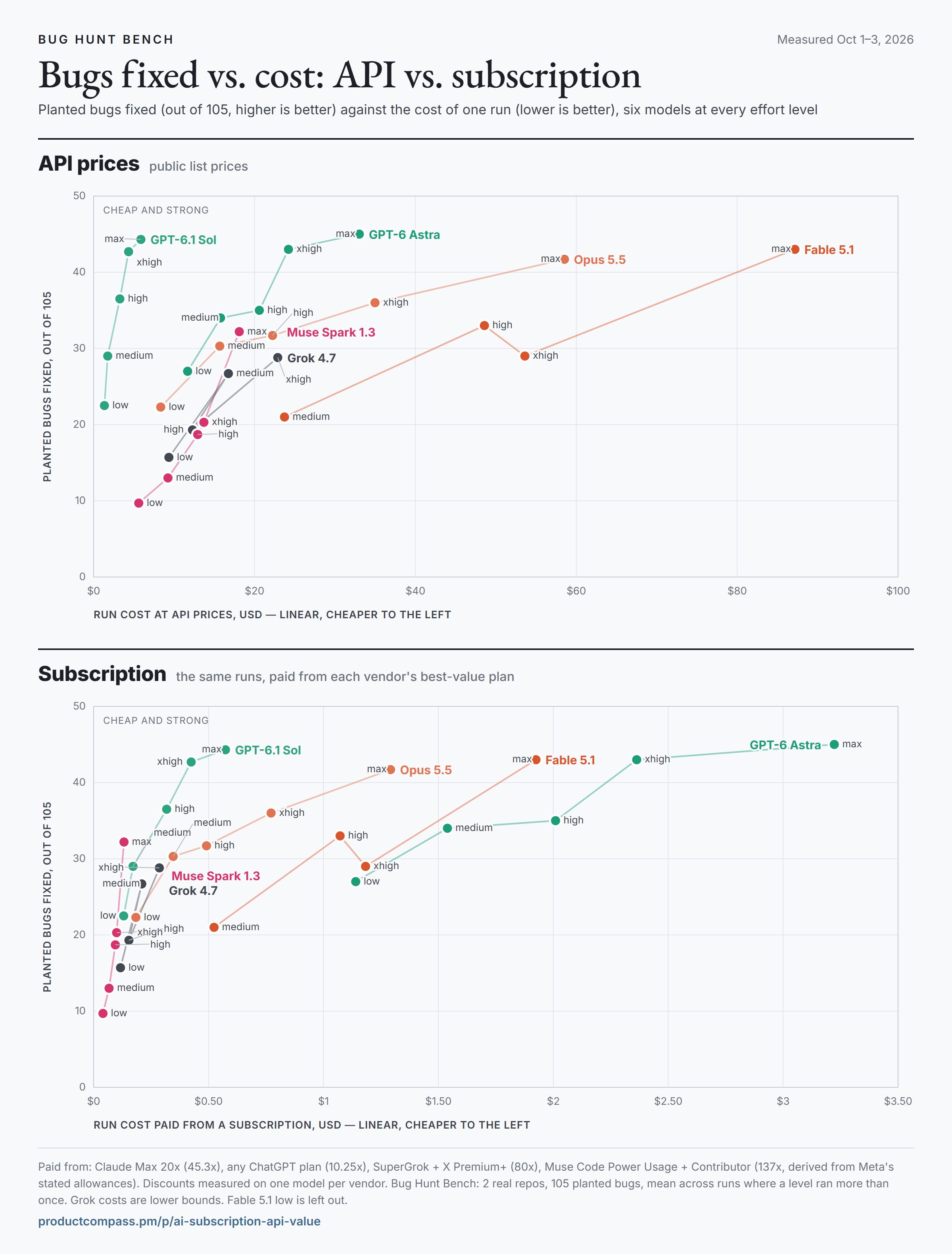
What does all this mean?
If you want the cheapest western subscription, it’s Muse Code if you are willing to share your data with Meta - aka “Contributor.” If you’re looking for a cheap agent for your daily work, it’s Muse Spark 1.3 + Contributor (visible as a separate model in their picker), not GPT-6.1 Sol.
Just after Muse Code + Contributor:
For working with codebases, OpenAI. Despite Anthropic’s ~4x bigger multipliers (measured on Pro and Max 20x), GPT-6.1 Sol will still cost you less than Opus 5.5. On my Bug Hunt Benchmark, it comes out ahead.
For a wider variety of tasks, Opus 5.5. On the Artificial Analysis benchmark, Opus 5.5 is now the best value for the money.
Grok is profitable only when you combine X Premium+ subscription ($40/mo) with SuperGrok ($30/mo). This gives you a 80x multiplier (compared to the $70/mo for both subscriptions).
My initial assessment (~190x) was wrong. I didn’t realize SpaceXAI silently increased my monthly allowance due to the X subscription. I measured the real numbers (15.7x, 18x) only after purchasing a new, isolated subscription.
More details on subscription multipliers
All data from my subscription experiments is available on GitHub:
https://github.com/phuryn/experiments/tree/main/subscription-multipliers
I’ve planned a few additional experiments, including burning a full Claude Max 5x subscription.
How to use Grok Build or Muse Code without the CLI?
Neither Grok Build nor Muse Code has a native GUI. As many of the readers know, I created one. It currently supports Grok Build, Muse Code, Codex, and Claude Code:
Extension for VS Code (32K installs)
Extension for Cursor, Antigravity (134K downloads)
Desktop app for Windows, macOS, and Linux: https://afkpilot.com/desktop
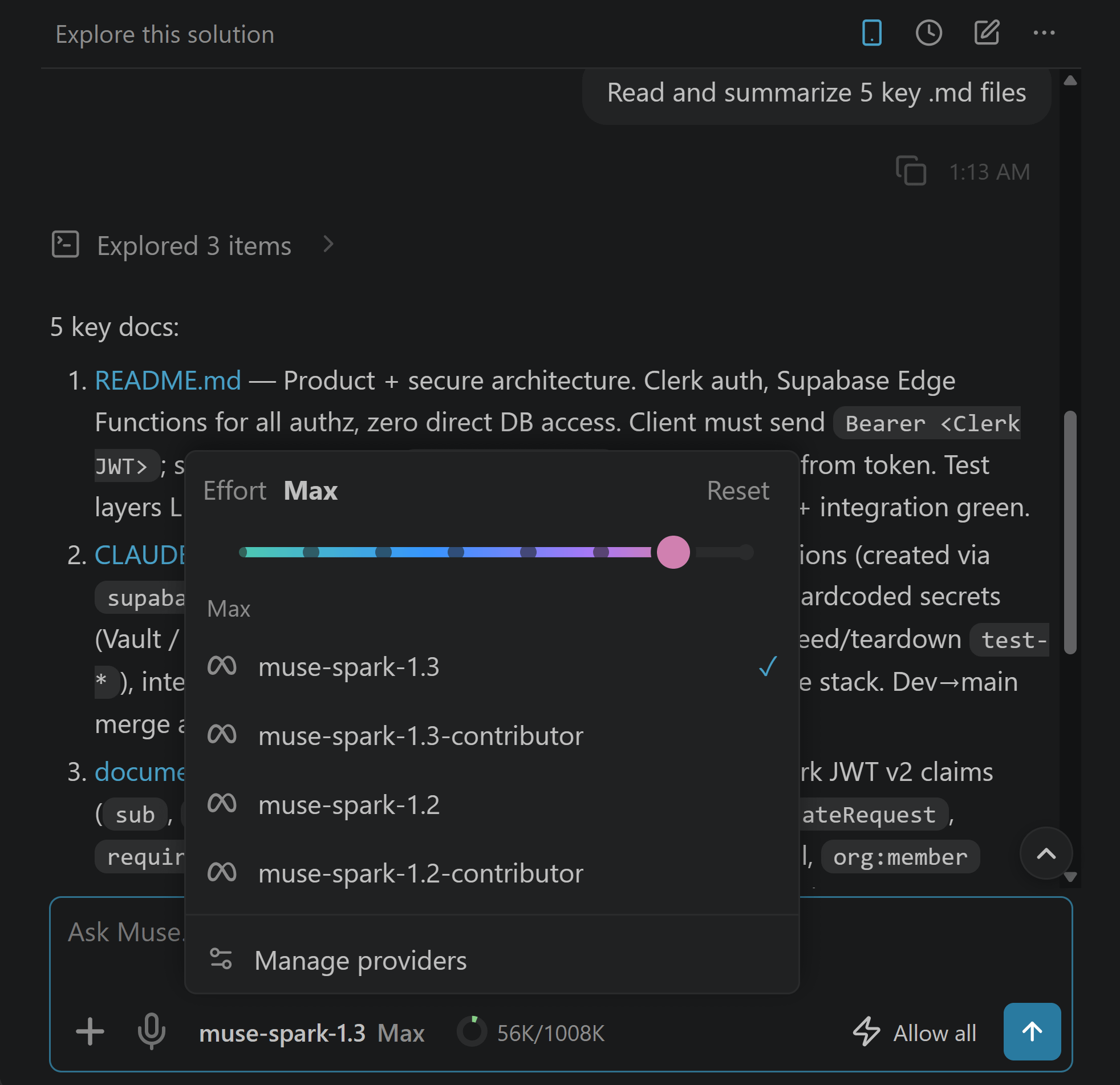
Unlike OpenAI or Anthropic, small Grok and Muse plans ($30 SuperGrok, $15 Muse) are enough to do real agentic work. SuperGrok $30/mo also gives you access to the Grok Bot.
We will discuss Bots and Dots another time ;)
Side note: Here, you can see the recent episode with Moe Ali from Product Faculty, in which we discussed hardening production apps without coding.
The ultimate From Prototype to Production guide:
Thanks for Reading The Product Compass
It’s amazing to learn and grow together.
Have an amazing rest of the week,
Paweł